English / Inglés

Alphabet

Grammar and lingüística

The way you combine words and change their form and position in a sentence, or the rules of this. The linguistics is the scientific study of languages

-Gramática, es la parte de la lingüística – ciencia del lenguaje – que estudia los elementos de una lengua, así como la forma en que estos se organizan y se combinan.

Vocabulary / Reading

Writing / Composición

Pronunciation / Speaking

Grammar

American grammar is very similar to British grammar, but with some small differences, especially prepositions. For example, American say See you Friday, but British people say See you on Friday.

British and American English. The same, but different

British and American people speak the same language English, but with some small differences.

↓↑

Indefinite Article / A writer´s room. Things

The grammatical name for the words «a» and «an» in English

a →  + consonant sound

an → + vowel sound. Before a, e, i, o, u.

Also an hour (h is not pronounced: an (h)our; but a university and a European country (these words are pronounced «yuniversity», «yuropean».

We use a/an:

→ to say what something is

→ for jobs. to say what job people do

→ in expressions of frequency

another (an + other) → is one word (not an other)

We often use a / an the first time we mention a person or thing and then the the next time because it is now clear who or what we are talking about

e.g: I have a cat and a dog. The dog is white and the cat is black

↓↑

Definite article

the.  the name given to the word → the

→ Use the when we know which (board, questions, etc.). When the speaker and hearer know the thing we are talking about: Close the window = the one that is open.

We often use a / an the first time we mention a person or thing and then the the next time because it is now clear who or what we are talking about e.g: I have a cat and a dog. The dog is white and the cat is black

We use the with something or someone you mentioned before.

→when it is part of the name of something. eg. The USA

→ before superlative adjectives: the biggest, the best, etc.

→ with singular and plural nouns (the board, the questions).

→ when there is only one of something: the internet, the sun, etc.

We don´t usually use the  → When we talk about people or thing in general: Men are more interested in sport than women. (general) The women in this class work harder than the men ← (specific)

-Before possessive´s. She´s my mother´s cousin

-With the following

  • meals: breakfast, lunch, dinner, etc.
  • places: work, schcool, university, bed, home, etc.
  • by + transport: go by car, travel by train, etc.

↑↓

Singular and plural

Spelling of plural endings

-The plural of a noun is usually → S

a flower → some flowers

a week → six weeks

a nice place → many nine places

es after → -s / -ce/ -ge / -sh / -ch / -x

bus → buses / dish → dishes / church → churches / box → boxes

→consonant + y → ies

baby → babies / party → parties / dictionary → dictionaries

but → ay, ey, oy, uy → with S

day → days / monkey → monkeys / boy → boys / guy → guys

f / fe → ves

shelf → shelves / knife → knives / wife → wives

↓↑

These things are plural in English: scissors, glasses, trousers, jeans, shorts, pyjamas, tights, shoes, police.

↓↑

Irregular plurals

-Some plurals do not end in →S, they are irregular plurals

a man → two men  / a woman → some women

a child → many children

one foot → two feet / a tooth → all my teeth

a mouse → some mice

a person → two people / some people / many people

a sheep → two sheep / a fish → many fish

↑↓

There is/was and there are/were

-We use there is / there are -> to say that somebody or something exists. We use there is/was + a singular noun  and there are/were + plural nouns.

We often use there is/was and there are/were with ->  a/an, some and any. Use some (= not an exact number) and any with plural nouns.

Use some in positive sentences and any in negative and interrogative sentences.

There is is often contracted to There´s. There are is not usually contracted.

When we talk about a list of things we use there is if the first word in the list is singular or there are if the first word in the list is plural.

e. g: In my  room there´s a bed, two chairs, and a desk / In the living room there are two armchairs and a sofa.

↑↓

Countable / uncountable nouns

There are two kinds of nouns in English; countable and uncountable.

Countable: things you can count, e.g. apples. Countable nouns can be singular or plural.

Uncountable: things you can´t count, e.g. butter, meat. Uncountable nouns are normally singular

↑↓

a / an / some / any

We use a / an with singular countable nouns; a / an = one

We use some in afirmative with plural countable nouns and with uncountable nouns; some = not an exact number or quantity. We use some in interrogative to ask for and offer things → e.g. Can I have some apples, please? / Would you like some coffee?

We use any in negative and interrogative → with plural countable nouns and with uncountable nouns

20171112_235855.jpg

Quantifiers

We use How many … ? → with plural countable (c) nouns

We use How much … ? → with uncountable (u) nouns

In negative (-) sentences and interrogative (?) we usually use → much and many   e.g. I don´t drink much water / Do you drink much coffee?

We use:

-a lot (of) → with countable and uncountable nouns for a big quantity. In afirmative (+) sentences we usually use → a lot of

It is also possible to use a lot in (-) negative and (?) interrogative sentences: Do you drink a lot of coffee?  / I don´t eat a lot of vegetables

-quite a lot (of) → with countable and uncountable nouns for a medium quantity

a little / not much  →  with uncountable nouns for a small quantity

a few / not many →  with plural countable nouns for a small quantity

-none / any (none in short answers) → with countable and uncountable for zero quantity

20171112_235919.jpg

↑↓

Pronouns and adjectives

Stars and Stripes

-Subject Pronouns

Subject →in grammar, the person or thing that does the action described by a verb.

Pronoun → a word used instead of a noun that has usually already been talked about. For example, the words «he» «she», «it», are → pronouns. Word que se utiliza para reemplazar u ocupar el lugar del sujeto

I (always use capital I)

he, she, it (thing)

you (= singular and plural)

we

they (for people and things)

-Demostrative pronouns/adjectives: This / that / these / those

This (singular)  That (singular). We use for things near you (here)

These (plural)  Those (plural) We use for things which aren´t near you (there)

20170526_194245-e1496019795866.jpg

This, that, these and those can be adjectives (this watch) or pronouns (What´s this)

-Possessive Pronouns

Mine, your…

Defining relative clauses

Form

He is the man who (that) invented the World Wide Web.

This is the system which (that) I told you about.

That is the place where we buy our computers.

We can use that for people or things instead of who or which. This is less formal.

We use who (for people), which (for things) and where (for places) to introduce defining relative clauses.

These clauses give us essential information about the person, place or thing we are talking about.

The person who discovered …

The factory which makes …

The organisation where he works…

↑↓

Adjectives

When we use adjective whith a noun, the adjective goes before the noun

Adjectives don´t change before a plural noun: They´re blue jeans

We can also use adjectives whithout a noun, after the verb be →  e.g He´s strong / It isn´t easy

Modifiers

We often use the modifiers before adjectives → He´s very tall / He´s quite tall / He isn´t very tall

incredible

really

very

quite

a bit

not very

Possessive adjetives

In English, possess agre whith the → possessor. Concuerda con quien lo posee.

Possessive adjetives don´t change with plural nouns.  No coincide, no cambia con el género y número del sustantivo.

I → My
He → His
She → Her
It → Its. Its = possessive.  Be careful whith it´s and its.
You → your
We → our
They → their. Their = of plural people or things. Personas o cosas.

We use possessive adjectives + a noun

Comparative and superlative adjectives

Use comparative adjectives + than to compare two things, people, etc. We use than after a comparative adjective.

We add –er to regular short adjectives to form the comparative and we add -est to regular short adjectives to form the superlative:

new → newer →  newest

We add more and most to form the comparative and superlative forms with longer adjectives:

interesting →  more interesting →  most interesting

We use much to add emphasis to a comparative adjective.

20171113_000012.jpg

Superlative adjectives

Use the + superlative adjective to say which is the (biggest, etc. ) in a group. We usually use the before a superlative adjective.

After superlatives, we use in (not of) + places, e.g the world, the class etc.

20171126_210241.jpg

Notice the spelling rules for comparative and superlative adjectives:

  • for regular short adjectives, add -er / -est
  • for adjective ending in -e, add -r / -st
  • for adjective ending in -y (after a consonant), change the -y to -i: happy →  happier / happiest
  • for adjective ending consonant – vowel – consonant, double the final consonant: big →  bigger / biggest; hot → hotter / hottest.

as … as 

Used to compare two things, people, amounts, etc. / with infinitive adjective. We use as + adjective + as to compare two things and say they are the same or equal. eg. Robbie is as tall as his brother.

We use not as + adjective + as to compare two things and say they are different or not equal. eg. Paul not as clever as Anna.

↑↓

Capital letters

– Subject pronoun I

-Days of the week and Months

-Names and surnames

-The first word in a sentence

-Towns and cities

Countries, continents, nationalities and languages. The word for a language is usually the

same as the nationality adjective, e.g in Italy the language is Italian

Nationality adjectives  don´t change with plural nouns or pronouns

Positions. Preposition

Below, in a lowerposition than someone or something else

(por) debajo de, abajo

Afterfollowing something that has happened

después de

Beforeearlier than something or someone

antes de/que

Begin, empezar / begin with, empezar por

in on at to
1. parts of the day: the morning, the afternoon, the evening 1. days 1. times of the day: night, midday, midnight, lunchtime 1. for movement or direction. We don´t use to before home: go home
2. seasons: summer 2. dates 2. the weekend
3. months  holiday / business 3. festivals: Christmas, Easter
4. years 4. hour
5. for position: in a flat, an office, a room, and public places etc. 5. for position: at work, home, school, university and public places

Preposition of place

We use preposition of place to describe where people and things are.

Where´s the coffee? It´s in the cupboard

Adrian is in front of the photocopier

Preposition of movement

We use preposition of movement to talk about the direction someone or something moves. Prepositions of movement follow a verb of movement.

Jack drove along the road.

The visitors are going around the factory

Common verbs of movement are → go, climb, come, run and walk

Common prepositions of movement are → up, down, to, in, into, on, onto, over, under, across, along, round, around, through

↓↑

Purpose

-I went to the supermarket to buy apples

-I would like to be famous / I want to pass the exam / I hope to have holidays

-(adjective) Nice to meet you / It´s difficult to learn English

Adverbs and expressions of frequency

We use adverbs of frequency to say how often you do something, they go: before all main verbs and → after verb be.

Use a positive verb with → never and hardly ever.

In negative sentences the adverb of frequency goes between the auxiliary and the verb.

-Always

-Usually

-Often

-Sometimes

-Hardly ever

-Rarely

-Never

Expressions of frequency / How often do you ….?

They usually go to the end of the sentence or verb phrase and sometimes goes at the biginning.

-once

-twice a week, a day etc.

-two or three times a night

-every day, time, week

-in the winter /summer …

Manner and modifiers

  • We use adverbs of manner to say how people do things
  • Adverbs usually go after the verb -> e.g. I speak English very well

20171209_195506.jpg

  • Remember the difference between adjectives and adverbs: I´m a careful driver. (careful is an adjective. It describes the noun, driver). I drive carefully. (carefully is an adverb. It describes the verbs, drive)

↑↑

modifying adverbs: very, quite, etc.

  • We use modifying adverbs with adjectives or other adverbs.
  • They always go before the adjective or adverb

Words ending in  -ly. Not all words that end in -ly are adverbs, e.g. friendly = adjective -> He is a friendly person.

Conjunctions

A word that is used to connect phrases or parts of a sentence. For example, the words:

and / whith

or

so

because

but

Anyone, anybody or anything?

Gerund

A word ending in ‘-ing’ that is made from a verb and used like a noun

-I´m good at speaking in public

-I love playing….

-Smoking is bad

Zero and first conditional

Zero conditional

If – clause (If / When + present simple), main clause (present simple)

If / When you drive very fast, it is more difficult to stop the car.

We use the zero conditional to talk about facts or things that are generally true. e.g If you want to travel in the USA, you need a visa. When you cool water to zero degrees, it freezes.

When you talk about things that are generally true, you can use if or when. There´s no difference in the meaning.

First conditional

If – clause (If / When + present simple), main clause (will)

If you drive very fast, it will be more difficult to stop.

We use the first conditional to talk about a possible future situation. e.g. If it rains tomorrow, we won´t go to the mountains.

When you talk about situations in the future, there is a difference between if and when. We use when + present simple to talk about a certain future action. e.g. When Jack arrives, I´ll ask him to help us.

We can use if in two  positions:

  • If – clause first: If you travel abroad, you need a passport.
  • Main clause first: You need a passport if you travel abroad.

When the if-clause is at the beginning of the sentence, we use a comma to separate it from the main clause.

Future

Bibliography:

Life.  Pre Intermediate. By John Hughes, Helen Stephenson and Paul Dummett.

English File. Elementary  By Christina Latham Koening, Clive Oxenden, Paul Seligson /

Third Edition. Descargar

CELN en el País: #ParoNacional / #Davos / #YoNoParo vs. #ParoGeneralActivo

#ParoNacional / Davos → Foro Económico Mundial en Argentina

#ParoGeneralActivo / #YoNoParo

Hacia el paro activo

¿Qué hicieron cada 24 de marzo, Néstor y Cristina Kirchner en Santa Cruz?

Opi Santa Cruz

Todos los años nos encargamos de recordarle a nuestros lectores y especialmente a quienes no viven en Santa Cruz, que conocen solo una parte del relato K, que cuando Néstor Kirchner gobernó Santa Cruz y CFK lo acompañaba como primera dama, al principio y desde 1989 como diputada provincial o en 1995 como senadora por Santa Cruz, JAMÁS promovieron un acto, una movilización o un recordatorio o una solicitada, por mínimo que fuera, sobre la Memoria de cada 24 de marzo.

Suele ser incómodo para nosotros reiterarnos en este sentido en estas fechas, pero es una obligación periodística recordarle una y otra vez a los lectores que también se renuevan a los largo de los meses, uno de los hechos más significativos que rodea al matrimonio Kirchner y su eventual devoción por ser adalides de la memoria del fatídico 24 de marzo de 1976, cuando la Dictadura militar (una vez más) se apropió del poder y subsumió al país en una época más oscura de la que se tenga memoria.

En el año 2015 (lo replicamos en 2015 y lo volvemos a hacer hoy, porque “hay que tener memoria”) hicimos un trabajo de archivo que resultó realmente muy curioso, porque a través de él, se pudo contrastar fácticamente el antes y el después del “relato K”, alrededor de esta fecha que ha pasado a ser todo un símbolo de lo que en un país no puede volver a ocurrir: el avance de una dictadura militar.

Horas y horas de buscar en todos los diarios de aquellos años en los que Néstor y Cristina representaron la política de Santa Cruz, arrojó un resultado muy llamativo, porque mientras uno esperaba hallar alguna mención o invitación pública a un recordatorio, de parte del gobernador Kirchner o de la diputada y/o senadora Cristina Fernández, alrededor de esta simbólica fecha, cada 24 de marzo, al menos, para el gobierno de Santa Cruz, pasó prácticamente desapercibido. NUNCA, el gobernador Kirchner le prestó importancia o la destacó públicamente como algo relevante. Esto revela la utilización política y personal de los DDHH y de los hitos sensibles al sentir popular, como el 24 de marzo de cada año, para montar el relato populista y sesgado de la historia, en beneficio propio.

Como lo pudimos comprobar, Kirchner jamás hizo declaraciones al respecto, no participó en actos “De la memoria y la Justicia”, no promovió ni alentó y ni apoyó marcha alguna, recordando los 30 mil desaparecidos ni repudiando el golpe militar del año 1976, nunca emitió un comunicado oficial atendiendo la importancia de la fecha y no existen registro de Néstor Kirchner y/o su esposa, repudiando a las FFAA o a integrantes de ellas que estuvieran entonces, en actividad y hubieran pertenecido al proceso.

Por el contrario, lo que se pudo observar de la información relevada, es que por esos tiempos, Néstor Kirchner mantenía una muy buena relación con el Ejército, la Armada, Prefectura Naval y Fuerza Aérea, vinculación que mantenía estrechamente desde antes, pero que se afianzó en 1982 cuando las Fuerza Armadas fueron protagonistas principales de la contienda bélica del Atlántico Sur y precisamente, Santa Cruz, fue el territorio más “caliente” del continente, en materia de asentamiento militar y plataforma de operaciones aéreas y terrestres.

A continuación vamos a exponer la búsqueda que hicimos en los diarios de cada mes de marzo entre los años 1992 al 99, sintetizando en cada caso los temas más importantes que resaltaba la prensa en ese periodo días antes, durante y posteriores al 24 de marzo y particularmente cuáles eran las principales acciones que llevaba adelante Néstor Kirchner en este sentido. Como se verá: ninguna. Como cada 24 de marzo, Gobernador Gregores cumple años, en general, todos los años, el gobernador se dedicó a asistir a los festejos o a confraternizar con algún acto (paradójicamente) de las FFAA asentadas en la provincia.

La tapa del diario La Opinión Austral del 24 de marzo de 1992 - Foto:

1992

6 de marzo – El gobernador Néstor Kirchner despide en un acto protocolar al Capitán de Navío Luis Carrilero, quien es reemplazado por el Capitán de Navío Miguel Ángel Triviño como Comandante de la Fuerza de Marina en Santa Cruz.

12 marzo – Néstor Kirchner muestra públicamente su pesar por la muerte de monseñor Aleman.

20 marzo – Kirchner confirma visita de Menem en abril a Santa Cruz y ocupa gran parte del diario LOA, la noticia sobre el atentado a la Embajada de Israel.

23 marzo – Néstor Kirchner adelanta en el diario LOA que emprende viaje para asistir al Aniversario de Gobernador Gregores, que en ese momento festejaba sus 70 años. Viajó en el avión provincial en compañía de Eduardo Arnold, el senador nacional Felipe Ludueña y los diputados Héctor Icazuriaga y Roberto López. En la oportunidad el gobernador anunció inversiones y obras. En ningún momento se hizo mención a actos en proximidad de la fecha en que se recuerda el fin de la democracia en Argentina. De allí Kirchner voló a Buenos Aires para entrevistarse con Carlos Menem, en ese momento presidente.

24 marzo – Kirchner celebra los 70 años en Gobernador Gregores. Como estaba previsto viaja a Buenos Aires, se entrevista con el Secretario de Combustibles Luis Prol, asiste a una reunión de la Ofephi, habla con Menem y vuelve el 28 a Río Gallegos.

25 marzo – El diario local no hace ninguna mención en tapa, sobre la fecha del 24 de marzo. No se registra actividad oficial al respecto.

28 marzo – Breve recuadro en página interior del diario LOA, por parte del Concejo Deliberante de Río Gallegos, mencionando el nuevo aniversario del golpe del `76

30 de marzo – El diario resalta la preparación de los actos para recordar la gesta de Malvinas, donde, el mismo 2 de abril asistió el gobernador Kirchner, todo el Ejecutivo y autoridades nacionales.

1993

4 de marzo – Néstor Kirchner desde El Calafate, emocionado y contento por la visita del Senador Fernando de la Rúa, a quien elogió públicamente como un gran radical que aportaba a categorizar la oposición.

19 de marzo – El Gobernador Néstor Kirchner asiste al aniversario de la Brigada Aérea con asiento en Río Gallegos. El acto se realizó en la Plaza de Armas de la unidad a órdenes del Comodoro Nelson Godoy

24 marzo – La tapa del diario LOA ese día fue dominada por el título “Delibera hoy el Gabinete social” y los preparativos de Gobernador Gregores que cumplía 71 años.

25 marzo – Néstor Kirchner en Buenos Aires se entrevista con Bauzá

26 marzo – El General de Brigada David Martin Ruiz Palacios visitó al Gobernador en Casa de gobierno y el diario destaca especialmente la foto de ambos en atenciones protocolares. Precisamente el General José David Ruiz Palacios, fue Gobernador de Chaco durante el gobierno militar/strong> y en 2007, el gobernador Jorge Capitanich, aludiendo al gesto del presidente Kirchner, mandó a descolgar su retrato de la sala de mandatarios provinciales..El militar fue la mano derecha del ex ministro del Interior Albano Harguindeguy en 1976, como subsecretario del Interior, y en 1981 fue nombrado gobernador del Chaco, en reemplazo del general Antonio Facundo Serrano.
1994

1995

4 marzo – Eduardo Arnold en representación del gobierno provincial asisten al Homenaje al Almirante Brown en instalaciones de la Armada Argentina

18 marzo – Néstor Kirchner asiste a la Conmemoración de los 11 años de la Brigada Mecanizada XI de Río Gallegos.

22 marzo – El gobernador inaugura un equipo en el hospital, hecho más relevante en ese momento de la actividad oficial, reflejada por el diario.

23 marzo – Kirchner asistió al homenaje a la Sociedad Sanmartiniana de Santa Cruz.

24 marzo – El diario LOA puso como título relevante “Levantan el secreto de un decreto”. Ni una mención a la fecha en cuestión.

1996

12 marzo – Kirchner hace un convenio para instalar una Base Naval en caleta Olivia. Para tal fin visitó al Almirante Enrique Molina Pico, titular de la Armada Argentina. El proyecto contemplaba la instalación de una base naval en el puerto de Caleta Paula. El convenio se firmó en el edificio Libertador, pero nunca prosperó.Molina Pico fuerte admirador confeso del generalísimo Franco, fue acusado de encubrir crímenes de lesa humanidad y desapariciones de personas.

21 de marzo – Néstor Kirchner comparte un acto con el General Martín Balza, titular del Ejército, en la ciudad de San Julián, donde ambos proyectaban la instalación de una nueva guarnición militar, presentado ante las autoridades militares por el entonces Ministro de Economía Julio de Vido. La comitiva se trasladó a Piedrabuena y además de Balza y Kirchner la componían el General Jesus Romero y el General Jorge Halperín.

24 marzo – El diario riogalleguense pone como título más importante “Cavallo pidió combatir la especulación”.

25 marzo – Primera vez en 6 años que aparece un breve recuadro para conmemorar el día de la Verdad y la Justicia, donde partidos de izquierda y UCR convocan a un acto. El gobierno provincial no adhirió, ni comunicó su posición al respecto.

1997

24 marzo – La Opinión Austral omite cualquier tipo de referencia a la fecha conmemorativa y solo en el interior, redacta en un pequeño recuadro el acto de repudio al golpe militar del `76, organizada por el FUT (Frente de Unidad Trabajadora), junto a una solicitada de Milagros Pierini, titular de los DDHH en Santa Cruz. La misma que por aquel entonces – según sus propias declaraciones y las de Miguel del Plá – solicitaban un gimnasio municipal o salón deportivo de la provincia para realizar el acto conmemorativo de los Derechos Humanos, petición que le era negada sistemáticamente por el entonces gobernador.

Como dijo Estela de Carlotto: “Cuando vayamos a las urnas, pongamos también a la memoria adentro del sobre”. Ojalá la gente tenga memoria. (Agencia OPI Santa Cruz)
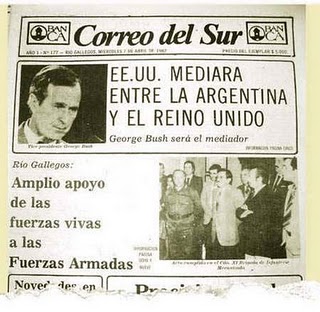
Mitos Kirchneristas: En los ´70 se dedicaron a negocios inmobiliarios y al apoyo como “fuerzas vivas a las Fuerzas Armadas” de la Dictadura Genocida

Los Kirchner, la dictadura y la represión.
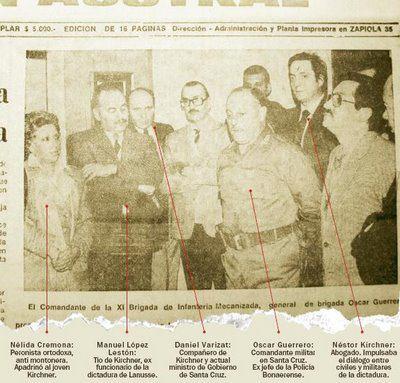
CELN en el País: Cuestionan a Alicia Kirchner por su participación como funcionaria en la Dictadura.

Cristina Kirchner decía «la época de la subversión»

MITOS KIRCHNERISTAS: Los gobiernos K son represores. (Cronología de represiones)

LA DÉCADA KIRCHNERISTA Y LAS VIOLACIONES DE DERECHOS HUMANOS.

Para Cristina Kirchner, la lucha social es Terrorismo.

Los socios de los Kirchner y su vinculación con la genocida Triple A: Hoy presentamos a Hugo Moyano

El día que Kirchner ninguneó a Hebe de Bonafini y tuvo que pernoctar en un domicilio particular

Milagros Pierini: blanco sobre negro a Kirchner y el rol de Carlotto en los Derechos Humanos

Néstor y Cristina #Kirchner / #Kirchnerismo / #FrenteParaLaVictoria / #FPV

El peronismo durante la dictadura militar (1976-1983) / #Peronismo: #Perón #PJ #Menemismo #Kirchnerismo 

CELN en el País y el Mundo: #Docentes | #IndioSolari

“En Santa Cruz no tenemos ni siquiera fecha de paritarias”

Pedro Cormack, Secretario general de la Asociación Docente de Santa Cruz, criticó con dureza la gestión de Alicia Kirchner y advirtió sobre la situación de los educadores de la provincia patagónica. Docentes y empleados estatales de Santa Cruz se manifestaron por la falta de sueldos

Los gremios docentes bonaerenses extienden el paro

Indio Solari#Rock | Encontraron en Once a una joven en estado de shock: se cree que asistió al recital del Indio | | Lanata criticó el discurso “antisistema” del Indio Solari: “Evade impuestos, usa el sistema para lo que le conviene. La AFIP tendría que llevárselo preso”

 Itatí, otro caso de narcopolítica

Estado Islámico

Cambio climático

#TrumpTaxReturn

Ejercicios Espirituales, Ignacio de Loyola. Apuntes

12 de marzo.

31 de julio.

24 de Diciembre.

LO QUE PASA Agenda / LO QUE PASA Agenda / LO QUE PASA Agenda / LO QUE PASA en la Cultura

LO QUE PASA Agenda / LO QUE PASA en el País / LO QUE PASA Agenda / LO QUE PASA Agenda

LO QUE PASA Agenda / LO QUE PASA Agenda / LO QUE PASA Agenda / LO QUE PASA Agenda

LO QUE PASA Agenda / LO QUE PASA Agenda / Agenda / LO QUE PASA Agenda / LO QUE PASA Agenda / LO QUE PASA AGENDA

Agenda / Agenda / Agenda / Agenda


Funciones, conceptos básicos

Muy buenos videos de TodoSobresaliente.com

Para representar una recta, sólo se necesitan dos puntos. Se logra por tabla de valores

pendiente


Funciones cuadráticas

La representación gráfica tiene forma de parábola. Se necesitan más puntos.

Punto vértice. Hay que calcularlo


Simetría. No puede haber un valor de X que tenga varios valores de Y.


Bisectríz. La linea recta que pasa por el vértice de un ángulo y lo divide en dos.

Simétrica impar: con respecto a la bisectríz del primer cuadrante.


Una función polinómica es par siempre que tenga:

-Exponente par y término independiente; el nro. solo se considera como el coeficiente de la X

Sin simetría, con coeficientes pares e impares.


Periodicidad

Creciente y decreciente. Cuando va aumentando la X → va aumentando tb. los valores de la Y.


Máximos y Mínimos.

-Máximos relativos y absolutos en toda la función

– Mínimos relativos y absolutos en toda la función.


Continuidad

Discontinuidad:

-Evitable, si es un punto el que la rompe.

-Salto finito

-Salto infinito.


Funciones Constantes

Cuando la pendiente es nula. Pendiente negativa. Sin pendiente. Negativa. De pendiente 0


Francisco Torres del MST – Nueva Izquierda se manifestó en contra de la prisión domiciliaria para el genocida #Etchecolatz

#CarcelComun / #CarcelComunPerpetuayEfectiva

Francisco Torres del MST – Nueva Izquierda se manifestó en contra de la prisión domiciliaria para #Etchecolatz

#CarcelComun / #CarcelComunPerpetuayEfectiva

ESTADO, POLÍTICA ENERGÉTICA Y EXTRACTIVISMO. Encuentro debate de Plataforma 2012

Plataforma2012

Coordina: Enrique Viale

Expositores:

PABLO BERTINAT, GUSTAVO LAHOUD Y FERNANDO «PINO» SOLANAS

Miércoles 17 de agosto, 19 hs en el Auditorio ATE – Avda. Belgrano 2527 – CABA


PRÓXIMOS ENCUENTROS DEBATE

SEPTIEMBRE
Luchas sociales. Nuevo escenario político

OCTUBRE

Corrupción, Narcotráfico y Democracia

NOVIEMBRE

Latinoamérica hoy: ¿Progresismos, Populismos y Nuevas derechas?


CIUDAD DE BUENOS AIRES


Libertad para #Belen / Derecho al #AbortoLegal

CÓRDOBA


PROVINCIA DE BUENOS AIRES

#Paro de trabajadores estatales

#Tarifazo / Segunda jornada de protestas


PROVINCIA DE BUENOS AIRES

Alejandro Bodart (MST – Nueva Izquierda) en homenaje a Adela Alcoba, militante del MST – Teresa Vive fallecida en el Puente Pueyrredón


CÓRDOBA