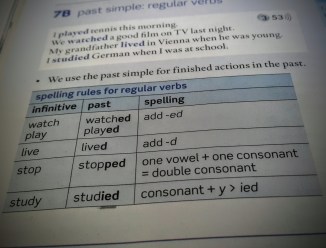
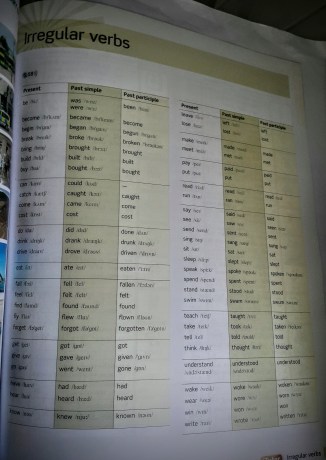
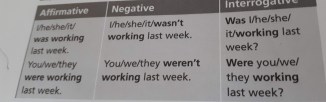
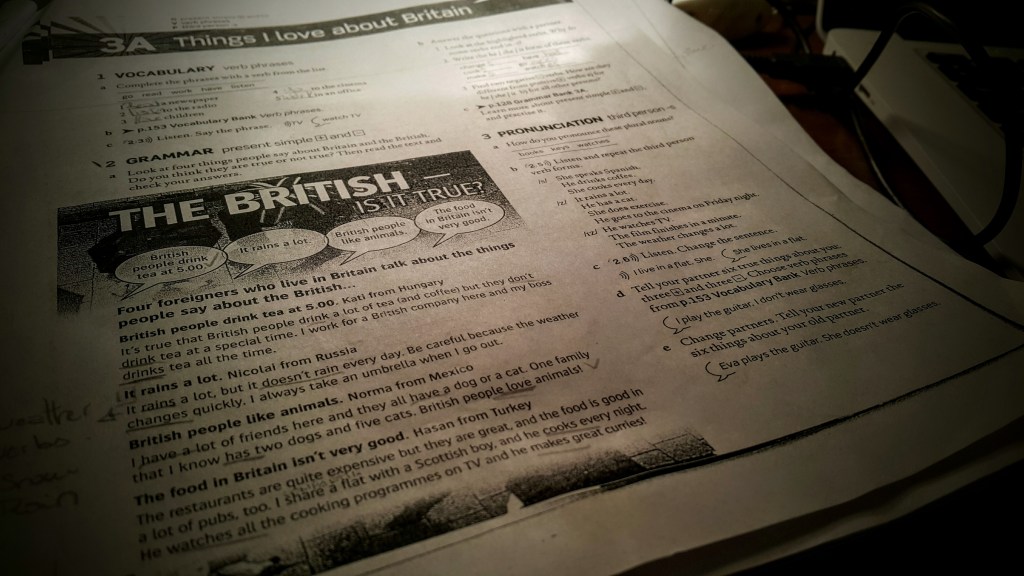
Alphabet

Grammar and lingüística
The way you combine words and change their form and position in a sentence, or the rules of this. The linguistics is the scientific study of languages
-Gramática, es la parte de la lingüística – ciencia del lenguaje – que estudia los elementos de una lengua, así como la forma en que estos se organizan y se combinan.
–Vocabulary / Reading
–Writing / Composición
–Pronunciation / Speaking
Grammar
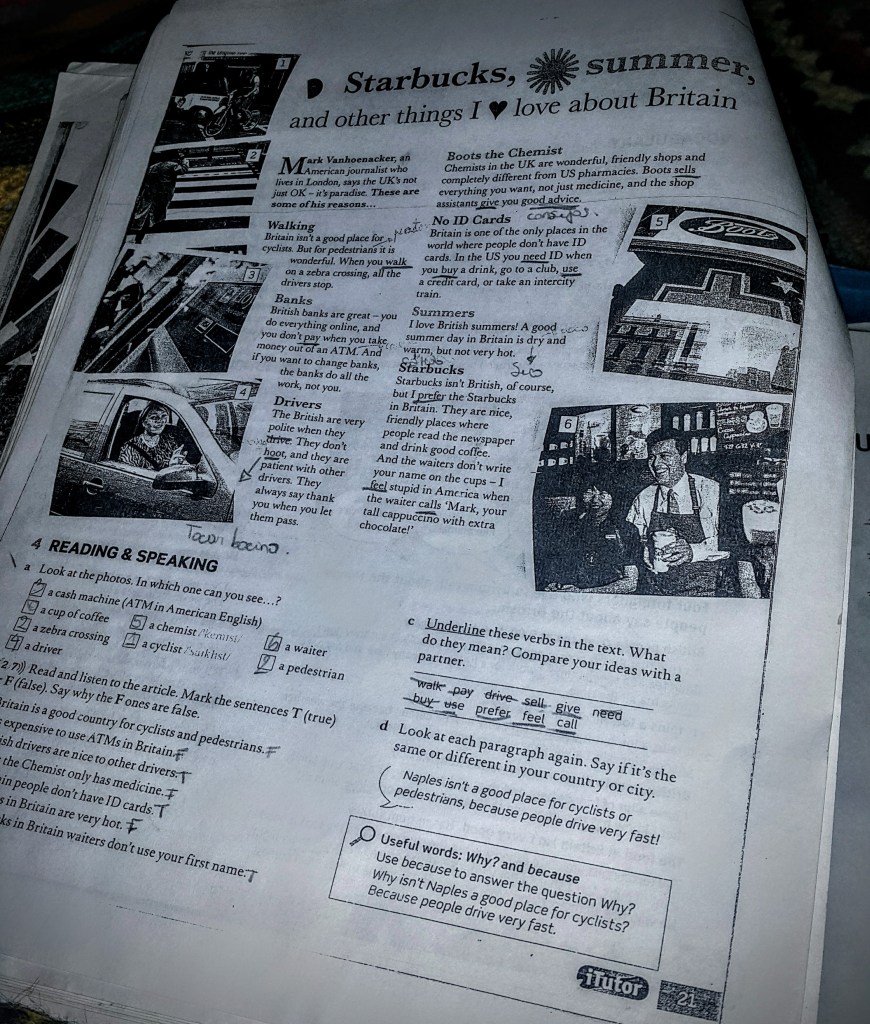
American grammar is very similar to British grammar, but with some small differences, especially prepositions. For example, American say See you Friday, but British people say See you on Friday.
British and American English. The same, but different
British and American people speak the same language English, but with some small differences.
↓↑
Indefinite Article / A writer´s room. Things
The grammatical name for the words «a» and «an» in English
a → + consonant sound
an → + vowel sound. Before a, e, i, o, u.
Also an hour (h is not pronounced: an (h)our; but a university and a European country (these words are pronounced «yuniversity», «yuropean».
We use a/an:
→ to say what something is
→ for jobs. to say what job people do
→ in expressions of frequency
another (an + other) → is one word (not an other)
We often use a / an the first time we mention a person or thing and then the the next time because it is now clear who or what we are talking about
e.g: I have a cat and a dog. The dog is white and the cat is black
↓↑
Definite article
the. the name given to the word → the
→ Use the when we know which (board, questions, etc.). When the speaker and hearer know the thing we are talking about: Close the window = the one that is open.
We often use a / an the first time we mention a person or thing and then the the next time because it is now clear who or what we are talking about e.g: I have a cat and a dog. The dog is white and the cat is black
We use the with something or someone you mentioned before.
→when it is part of the name of something. eg. The USA
→ before superlative adjectives: the biggest, the best, etc.
→ with singular and plural nouns (the board, the questions).
→ when there is only one of something: the internet, the sun, etc.
We don´t usually use the → When we talk about people or thing in general: Men are more interested in sport than women. (general) The women in this class work harder than the men ← (specific)
-Before possessive´s. She´s my mother´s cousin
-With the following
- meals: breakfast, lunch, dinner, etc.
- places: work, schcool, university, bed, home, etc.
- by + transport: go by car, travel by train, etc.
↑↓
Singular and plural
Spelling of plural endings
-The plural of a noun is usually → S
a flower → some flowers
a week → six weeks
a nice place → many nine places
→ es after → -s / -ce/ -ge / -sh / -ch / -x
bus → buses / dish → dishes / church → churches / box → boxes
→consonant + y → ies
baby → babies / party → parties / dictionary → dictionaries
but → ay, ey, oy, uy → with S
day → days / monkey → monkeys / boy → boys / guy → guys
f / fe → ves
shelf → shelves / knife → knives / wife → wives
↓↑
–These things are plural in English: scissors, glasses, trousers, jeans, shorts, pyjamas, tights, shoes, police.
↓↑
Irregular plurals
-Some plurals do not end in →S, they are irregular plurals
a man → two men / a woman → some women
a child → many children
one foot → two feet / a tooth → all my teeth
a mouse → some mice
a person → two people / some people / many people
a sheep → two sheep / a fish → many fish
↑↓
There is/was and there are/were
-We use there is / there are -> to say that somebody or something exists. We use there is/was + a singular noun and there are/were + plural nouns.
We often use there is/was and there are/were with -> a/an, some and any. Use some (= not an exact number) and any with plural nouns.
Use some in positive sentences and any in negative and interrogative sentences.
There is is often contracted to There´s. There are is not usually contracted.
When we talk about a list of things we use there is if the first word in the list is singular or there are if the first word in the list is plural.
e. g: In my room there´s a bed, two chairs, and a desk / In the living room there are two armchairs and a sofa.
↑↓
Countable / uncountable nouns
There are two kinds of nouns in English; countable and uncountable.
Countable: things you can count, e.g. apples. Countable nouns can be singular or plural.
Uncountable: things you can´t count, e.g. butter, meat. Uncountable nouns are normally singular
↑↓
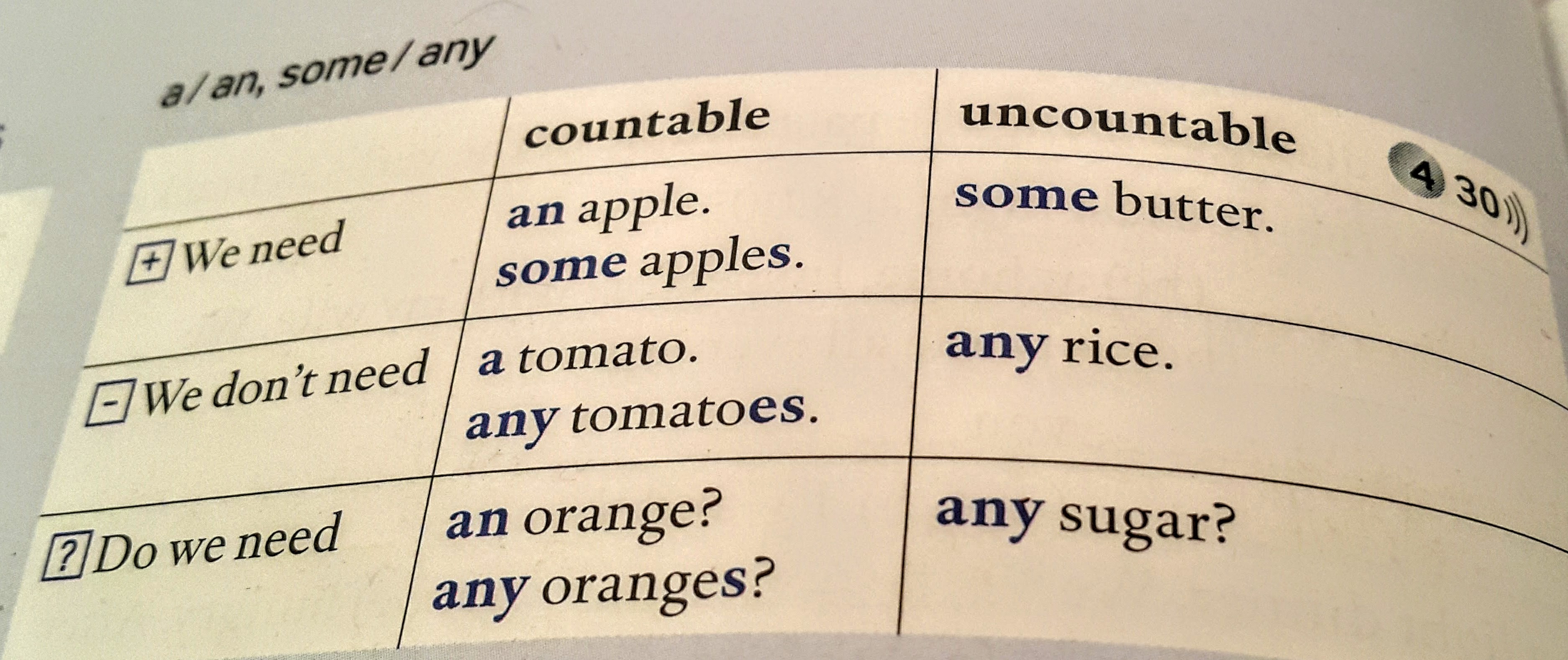
a / an / some / any
We use a / an with singular countable nouns; a / an = one
We use some in afirmative with plural countable nouns and with uncountable nouns; some = not an exact number or quantity. We use some in interrogative to ask for and offer things → e.g. Can I have some apples, please? / Would you like some coffee?
We use any in negative and interrogative → with plural countable nouns and with uncountable nouns
Quantifiers
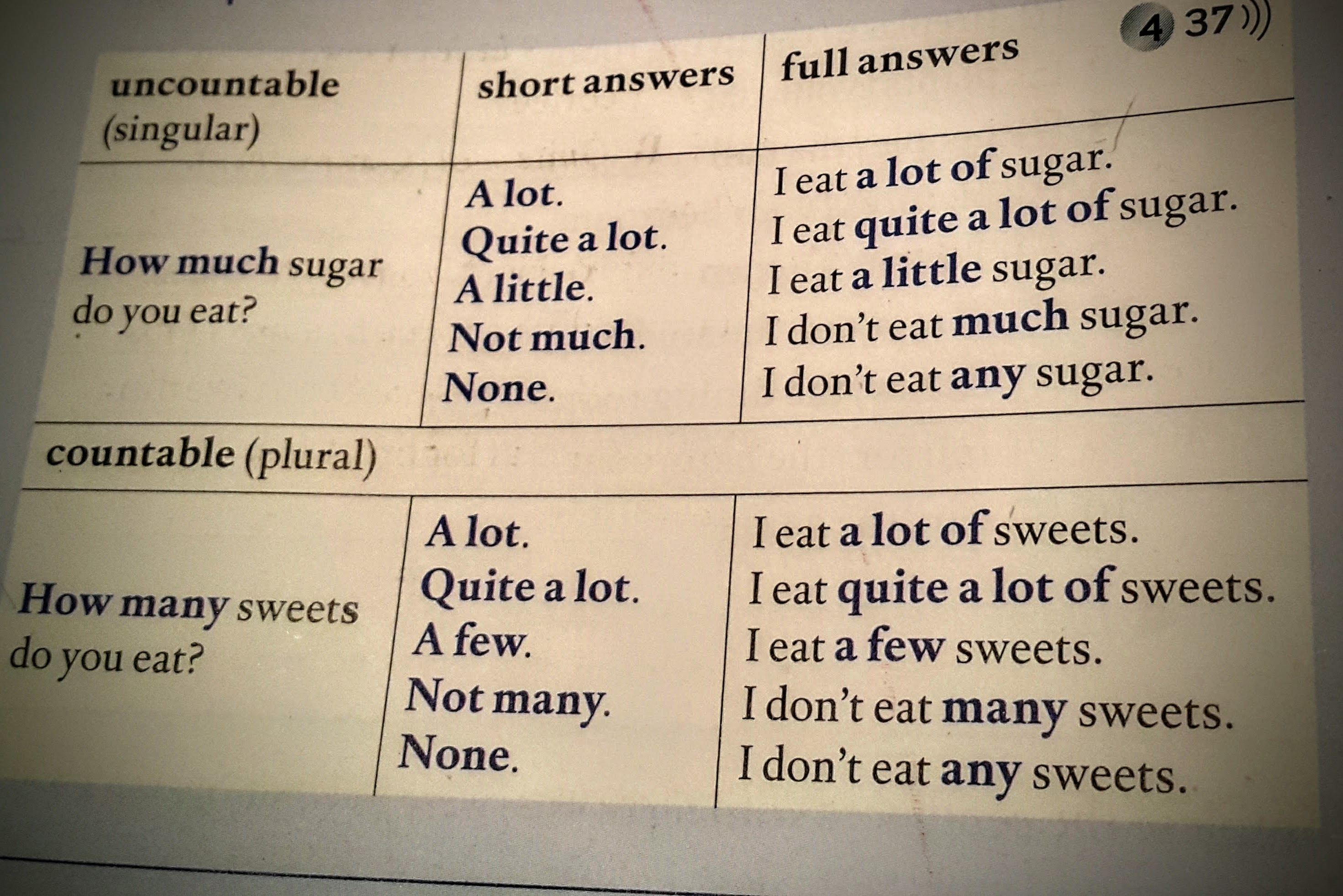
We use How many … ? → with plural countable (c) nouns
We use How much … ? → with uncountable (u) nouns
In negative (-) sentences and interrogative (?) we usually use → much and many e.g. I don´t drink much water / Do you drink much coffee?
We use:
-a lot (of) → with countable and uncountable nouns for a big quantity. In afirmative (+) sentences we usually use → a lot of
It is also possible to use a lot in (-) negative and (?) interrogative sentences: Do you drink a lot of coffee? / I don´t eat a lot of vegetables
-quite a lot (of) → with countable and uncountable nouns for a medium quantity
–a little / not much → with uncountable nouns for a small quantity
–a few / not many → with plural countable nouns for a small quantity
-none / any (none in short answers) → with countable and uncountable for zero quantity
↑↓
Pronouns and adjectives
Stars and Stripes
Subject →in grammar, the person or thing that does the action described by a verb.
Pronoun → a word used instead of a noun that has usually already been talked about. For example, the words «he» «she», «it», are → pronouns. Word que se utiliza para reemplazar u ocupar el lugar del sujeto
↓
I (always use capital I)
he, she, it (thing)
you (= singular and plural)
we
they (for people and things)
-Demostrative pronouns/adjectives: This / that / these / those
This (singular) That (singular). We use for things near you (here)
These (plural) Those (plural) We use for things which aren´t near you (there)

This, that, these and those can be adjectives (this watch) or pronouns (What´s this)
-Possessive Pronouns
↓
Mine, your…
Defining relative clauses
Form
He is the man who (that) invented the World Wide Web.
This is the system which (that) I told you about.
That is the place where we buy our computers.
We can use that for people or things instead of who or which. This is less formal.
We use who (for people), which (for things) and where (for places) to introduce defining relative clauses.
These clauses give us essential information about the person, place or thing we are talking about.
The person who discovered …
The factory which makes …
The organisation where he works…
↑↓
Adjectives
When we use adjective whith a noun, the adjective goes before the noun
Adjectives don´t change before a plural noun: They´re blue jeans
We can also use adjectives whithout a noun, after the verb be → e.g He´s strong / It isn´t easy
Modifiers
We often use the modifiers before adjectives → He´s very tall / He´s quite tall / He isn´t very tall
↓
incredible
really
very
quite
a bit
not very
Possessive adjetives
In English, possess agre whith the → possessor. Concuerda con quien lo posee.
Possessive adjetives don´t change with plural nouns. No coincide, no cambia con el género y número del sustantivo.
↓
I → My
He → His
She → Her
It → Its. Its = possessive. Be careful whith it´s and its.
We → our
They →
their. Their = of plural people or things. Personas o cosas.
We use possessive adjectives + a noun
Comparative and superlative adjectives
Use comparative adjectives + than to compare two things, people, etc. We use than after a comparative adjective.
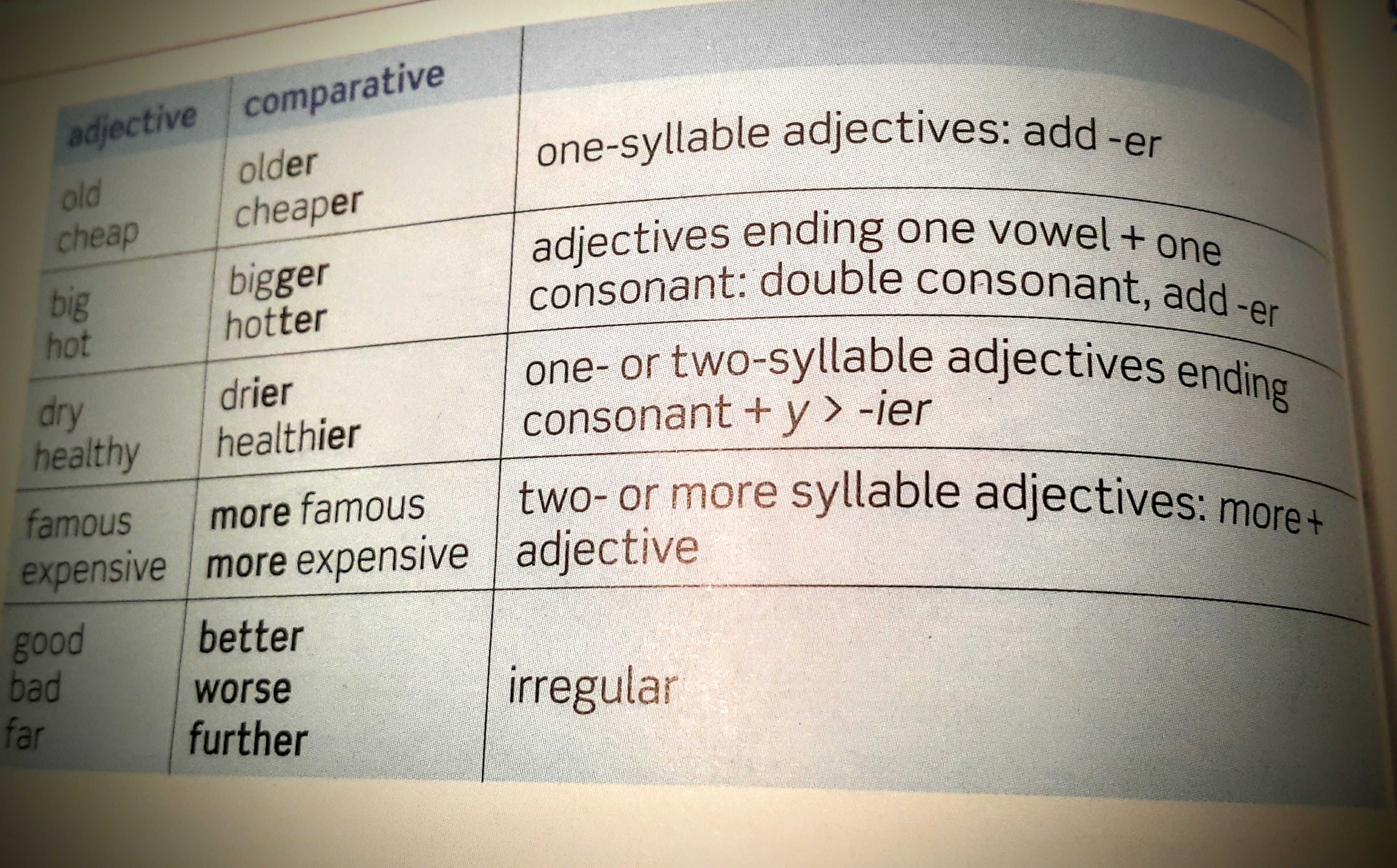
We add –er to regular short adjectives to form the comparative and we add -est to regular short adjectives to form the superlative:
new → newer → newest
We add more and most to form the comparative and superlative forms with longer adjectives:
interesting → more interesting → most interesting
We use much to add emphasis to a comparative adjective.
Superlative adjectives
Use the + superlative adjective to say which is the (biggest, etc. ) in a group. We usually use the before a superlative adjective.
After superlatives, we use in (not of) + places, e.g the world, the class etc.
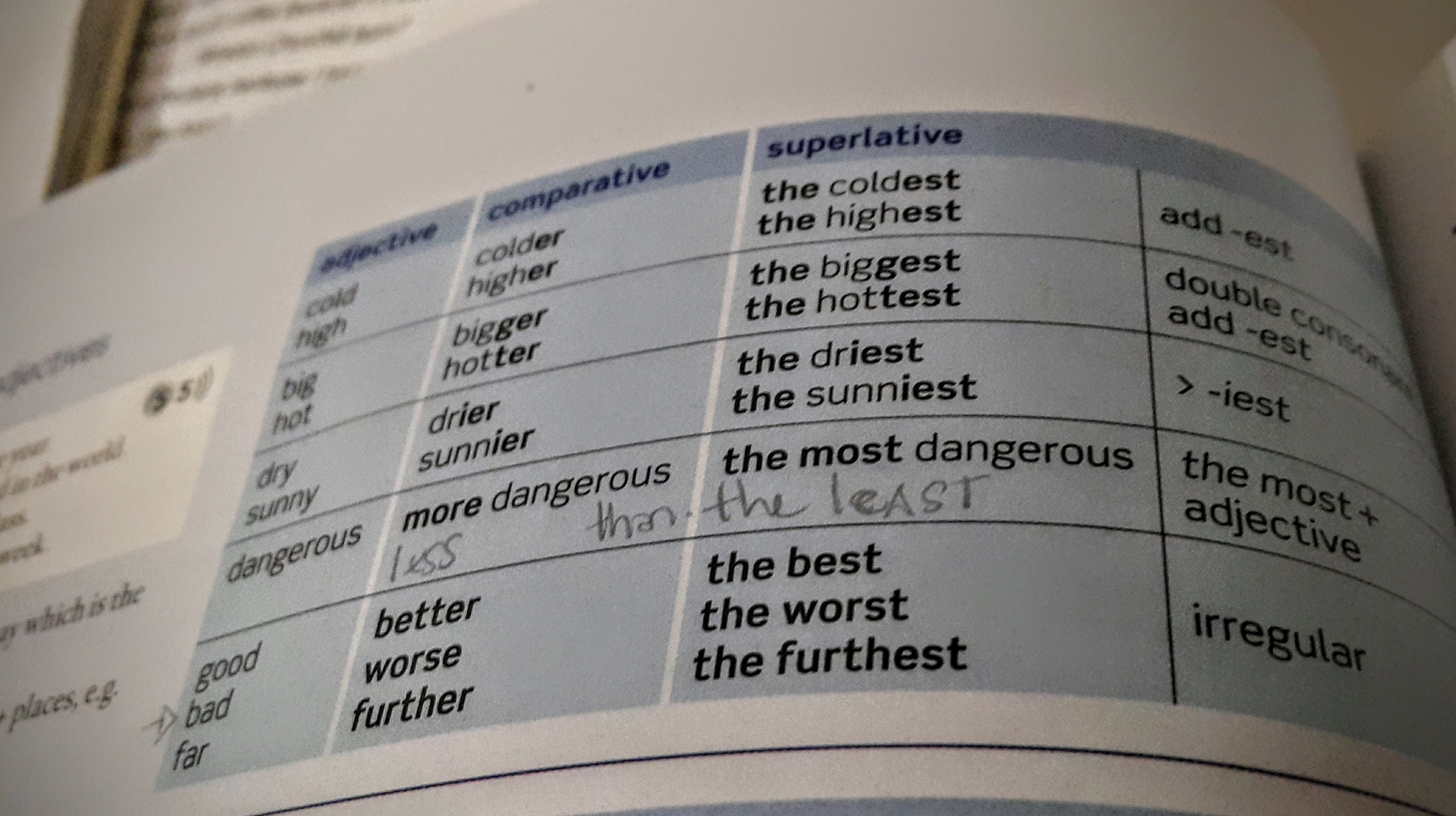
Notice the spelling rules for comparative and superlative adjectives:
- for regular short adjectives, add -er / -est
- for adjective ending in -e, add -r / -st
- for adjective ending in -y (after a consonant), change the -y to -i: happy → happier / happiest
- for adjective ending consonant – vowel – consonant, double the final consonant: big → bigger / biggest; hot → hotter / hottest.
as … as
Used to compare two things, people, amounts, etc. / with infinitive adjective. We use as + adjective + as to compare two things and say they are the same or equal. eg. Robbie is as tall as his brother.
We use not as + adjective + as to compare two things and say they are different or not equal. eg. Paul not as clever as Anna.
– Subject pronoun I
-Days of the week and Months
-Names and surnames
-The first word in a sentence
-Towns and cities
Countries, continents, nationalities and languages. The word for a language is usually the
same as the nationality adjective, e.g in Italy the language is Italian
Nationality adjectives don´t change with plural nouns or pronouns
↓

Positions. Preposition
–Below, in a lowerposition than someone or something else
(por) debajo de, abajo
–After, following something that has happened
después de
–Before, earlier than something or someone
antes de/que
–Begin, empezar / begin with, empezar por
| in |
on |
at |
to |
| 1. parts of the day: the morning, the afternoon, the evening |
1. days |
1. times of the day: night, midday, midnight, lunchtime |
1. for movement or direction. We don´t use to before home: go home |
| 2. seasons: summer |
2. dates |
2. the weekend |
| 3. months |
holiday / business |
3. festivals: Christmas, Easter |
| 4. years |
4. hour |
| 5. for position: in a flat, an office, a room, and public places etc. |
5. for position: at work, home, school, university and public places |
Preposition of place
We use preposition of place to describe where people and things are.
↓
Where´s the coffee? It´s in the cupboard
Adrian is in front of the photocopier
Preposition of movement
We use preposition of movement to talk about the direction someone or something moves. Prepositions of movement follow a verb of movement.
Jack drove along the road.
The visitors are going around the factory
Common verbs of movement are → go, climb, come, run and walk
Common prepositions of movement are → up, down, to, in, into, on, onto, over, under, across, along, round, around, through
↓↑
Purpose
-I went to the supermarket to buy apples
-I would like to be famous / I want to pass the exam / I hope to have holidays
-(adjective) Nice to meet you / It´s difficult to learn English
Adverbs and expressions of frequency
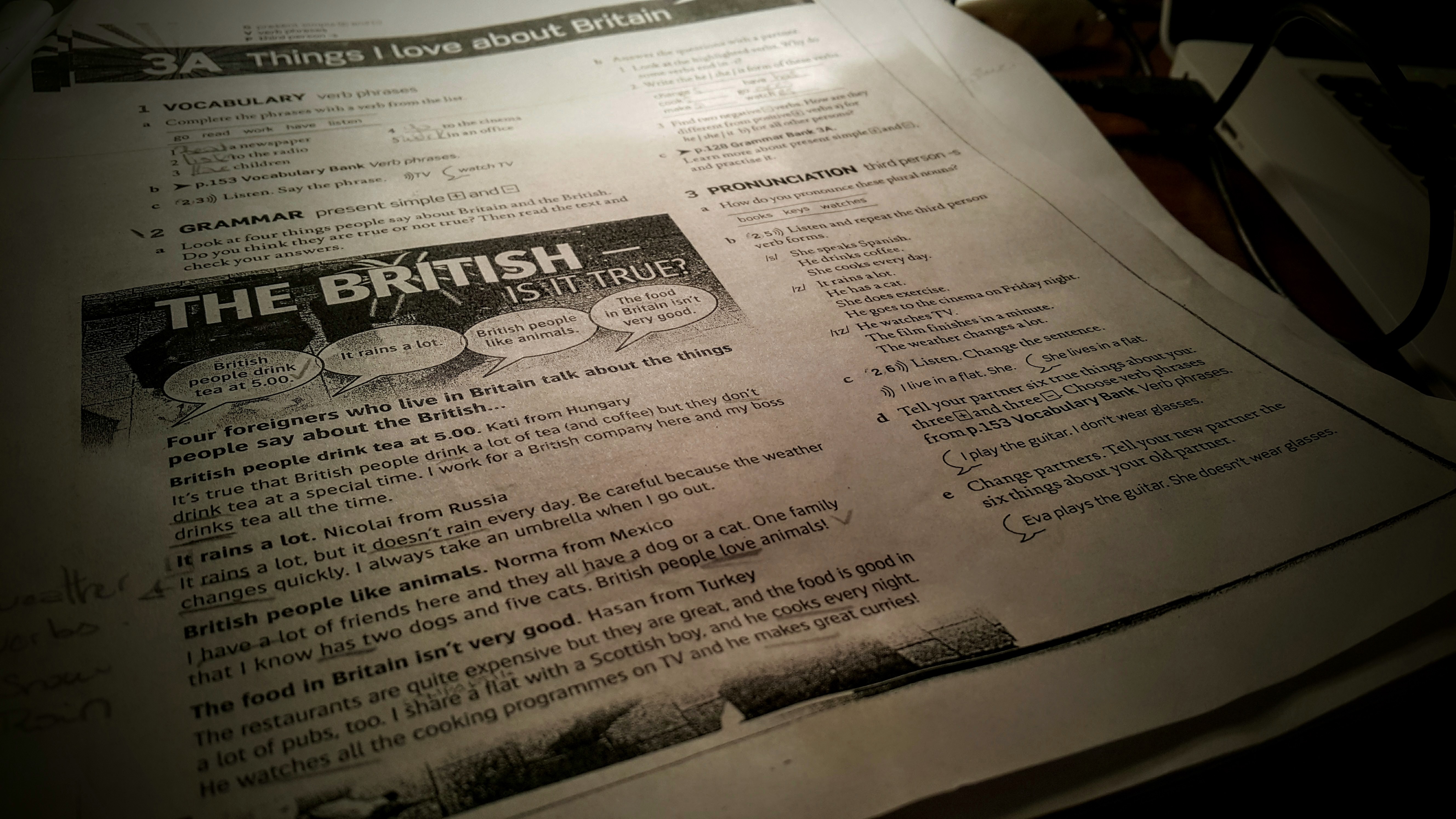
We use adverbs of frequency to say how often you do something, they go: before all main verbs and → after verb be.
Use a positive verb with → never and hardly ever.
In negative sentences the adverb of frequency goes between the auxiliary and the verb.
↓
-Always
-Usually
-Often
-Sometimes
-Hardly ever
-Rarely
-Never
Expressions of frequency / How often do you ….?
They usually go to the end of the sentence or verb phrase and sometimes goes at the biginning.
-once
-twice a week, a day etc.
-two or three times a night
-every day, time, week
-in the winter /summer …
Manner and modifiers
- We use adverbs of manner to say how people do things
- Adverbs usually go after the verb -> e.g. I speak English very well

- Remember the difference between adjectives and adverbs: I´m a careful driver. (careful is an adjective. It describes the noun, driver). I drive carefully. (carefully is an adverb. It describes the verbs, drive)
↑↑
modifying adverbs: very, quite, etc.
- We use modifying adverbs with adjectives or other adverbs.
- They always go before the adjective or adverb
Words ending in -ly. Not all words that end in -ly are adverbs, e.g. friendly = adjective -> He is a friendly person.
Conjunctions
A word that is used to connect phrases or parts of a sentence. For example, the words:
and / whith
or
so
because
but
Anyone, anybody or anything?
Gerund
A word ending in ‘-ing’ that is made from a verb and used like a noun
-I´m good at speaking in public
-I love playing….
-Smoking is bad
Zero and first conditional
Zero conditional
If – clause (If / When + present simple), main clause (present simple)
If / When you drive very fast, it is more difficult to stop the car.
We use the zero conditional to talk about facts or things that are generally true. e.g If you want to travel in the USA, you need a visa. When you cool water to zero degrees, it freezes.
When you talk about things that are generally true, you can use if or when. There´s no difference in the meaning.
First conditional
If – clause (If / When + present simple), main clause (will)
If you drive very fast, it will be more difficult to stop.
We use the first conditional to talk about a possible future situation. e.g. If it rains tomorrow, we won´t go to the mountains.
When you talk about situations in the future, there is a difference between if and when. We use when + present simple to talk about a certain future action. e.g. When Jack arrives, I´ll ask him to help us.
We can use if in two positions:
- If – clause first: If you travel abroad, you need a passport.
- Main clause first: You need a passport if you travel abroad.
When the if-clause is at the beginning of the sentence, we use a comma to separate it from the main clause.
Future
Bibliography:
Life. Pre Intermediate. By John Hughes, Helen Stephenson and Paul Dummett.
English File. Elementary By Christina Latham Koening, Clive Oxenden, Paul Seligson /
Third Edition. Descargar